
The two announcements solve different problems
On July 24, 2026, Meta announced Facebook Verified, a free profile badge, and Seller, a separate app for people who sell on Facebook Marketplace. Reuters reported the two launches and their main features the same day.
Facebook Verified adds a signal that a real person completed an identity check. Seller gathers listing and sales work in one place. Identity verification and seller workflow are different functions, and neither announcement says an individual transaction is guaranteed to be safe.
Facebook Verified checks a person, not the safety of a deal
The process asks a user to record a short video selfie, which Meta checks against existing profile photos. Eligibility is limited to users age 18 or older whose accounts are in good standing and show no evidence of inauthentic behavior. Pages and Professional Mode accounts are excluded.
The badge is set to appear first in Marketplace, Dating, Groups, and Profile. It has no subscription fee, but the rollout starts in select markets with global expansion planned. Meta’s announcement does not confirm availability in South Korea.
Meta explicitly says the badge is not an endorsement and does not guarantee that a user is trustworthy. It can add context before a conversation, but the item, price, payment method, and messages still need their own checks.
Seller puts listing work into a dedicated app
Seller syncs existing Marketplace listings, messages, and selling history. From uploaded photos, Meta AI can suggest a title, description, price, and category. The app also supports bulk listing, inventory management, a unified item-based inbox, and performance data such as views, clicks, message threads, and sold listings.
At launch, Seller is available on the App Store to US users age 18 and older. A web experience is available to sellers who downloaded the iOS app, and Android testing is underway. The announcement does not confirm a South Korean release. Sellers can also continue using Marketplace inside Facebook.

The badge does not replace a safe transaction routine
Facebook warns that Marketplace scams can target both buyers and sellers. Requests to move an early conversation away from Facebook or Messenger, messages claiming there is a payment problem, and pressure to finish immediately are reasons to pause.
Ask to see a valuable item before sending money, and confirm that an item and its owner are real before paying a deposit. Sellers should check their own payment account rather than treating a screenshot or email as proof that money arrived.
Do not follow an unexpected link or share a password or verification code. The FTC advises resisting urgency and checking a claim through a website or contact method you already know, rather than one supplied in the message.
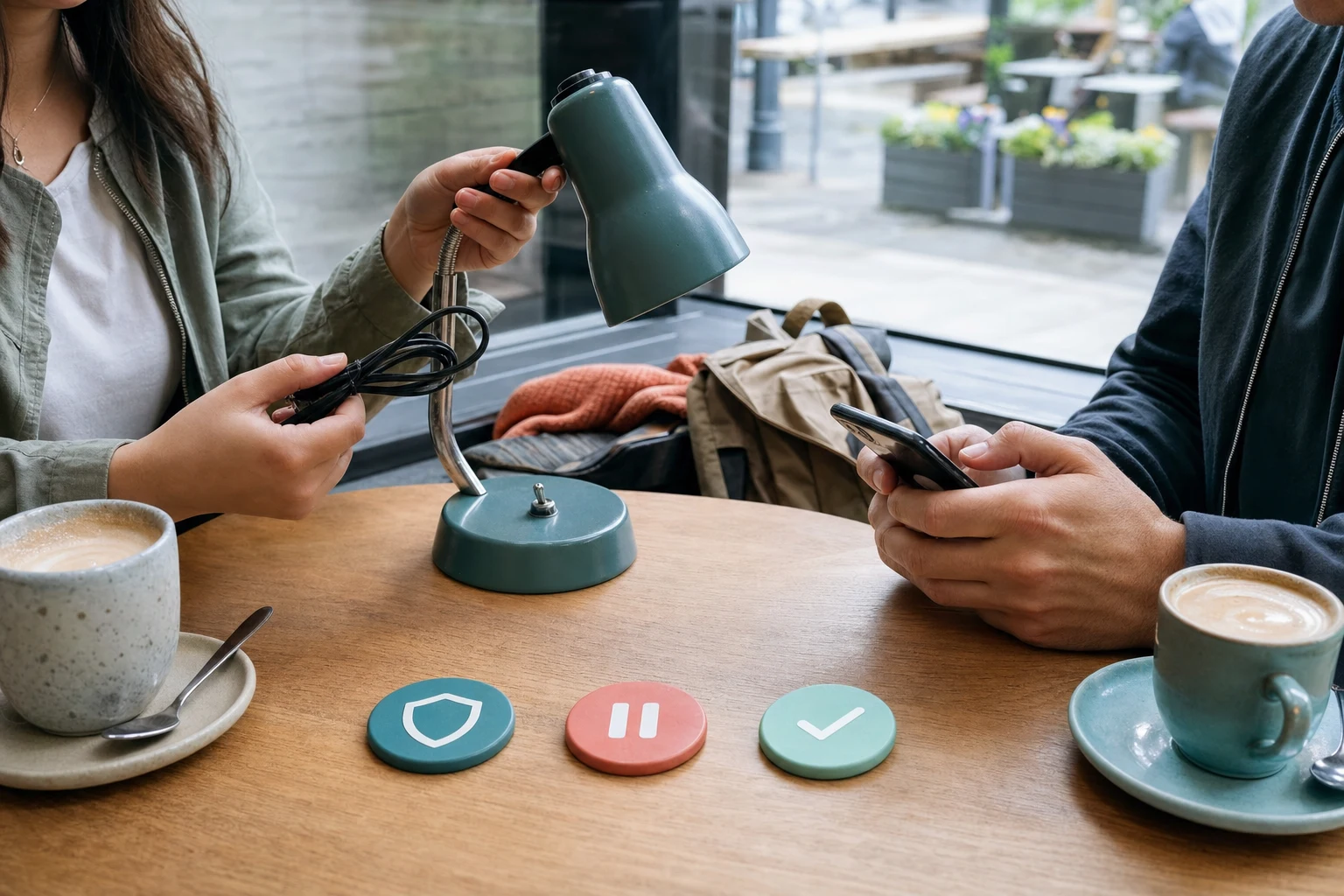
If something feels wrong, stop the deal and the conversation
A price far below the market, an off-platform request, advance payment, a demand for gift cards, cryptocurrency or a wire service, or a refund request before money appears in your account all deserve a pause. Show the situation to someone you trust before taking another step.
Facebook advises canceling a suspicious transaction, ending communication, and reporting the listing or person. Contact local authorities when necessary. Those steps still apply when a profile displays a Facebook Verified badge.
One last check
Five checks before you continue a deal
- 01
Treat the badge as an identity signal, not a guarantee that the transaction is safe.
- 02
Keep the conversation on Facebook or Messenger.
- 03
Confirm the item, its condition, and ownership before paying or sending a deposit.
- 04
Check your own payment account instead of trusting a screenshot or email.
- 05
Stop if you see pressure, an outside link, a verification-code request, or a forced payment method.
Sources
Sources used for this article
- Meta — Introducing Facebook Verified
- Meta — Introducing Seller for Facebook Marketplace
- Reuters — Meta launches the Seller app
- Facebook Help Center — About scams on Marketplace
- Facebook Help Center — Buy and sell responsibly on Marketplace
- FTC Consumer Advice — How to avoid a scam
Checked July 27, 2026 against Meta’s July 24 announcements, Reuters reporting, Facebook Marketplace help pages, and FTC consumer guidance. The official material does not confirm South Korean availability for either rollout, and Meta says the badge is neither an endorsement nor a guarantee of trustworthiness.
Was this guide useful?
This browser can leave one heart per article.
Meta AI Can Connect to Email and Calendar—Check the Permissions First
Meta AI is adding connected email and calendar features, scheduled briefings, recurring jobs, research, and slides. Here is what to check before granting Google Account access.
Check the rollout, permissions, and recurring jobs
A Steam Forum Fix Tells You to Run PowerShell: Stop and Check First
A reported Steam forum campaign used fake fixes to install an XMRig cryptominer. Here is the calm way to verify game files, scan Windows, and secure your accounts.
Check a suspicious Steam fix safely