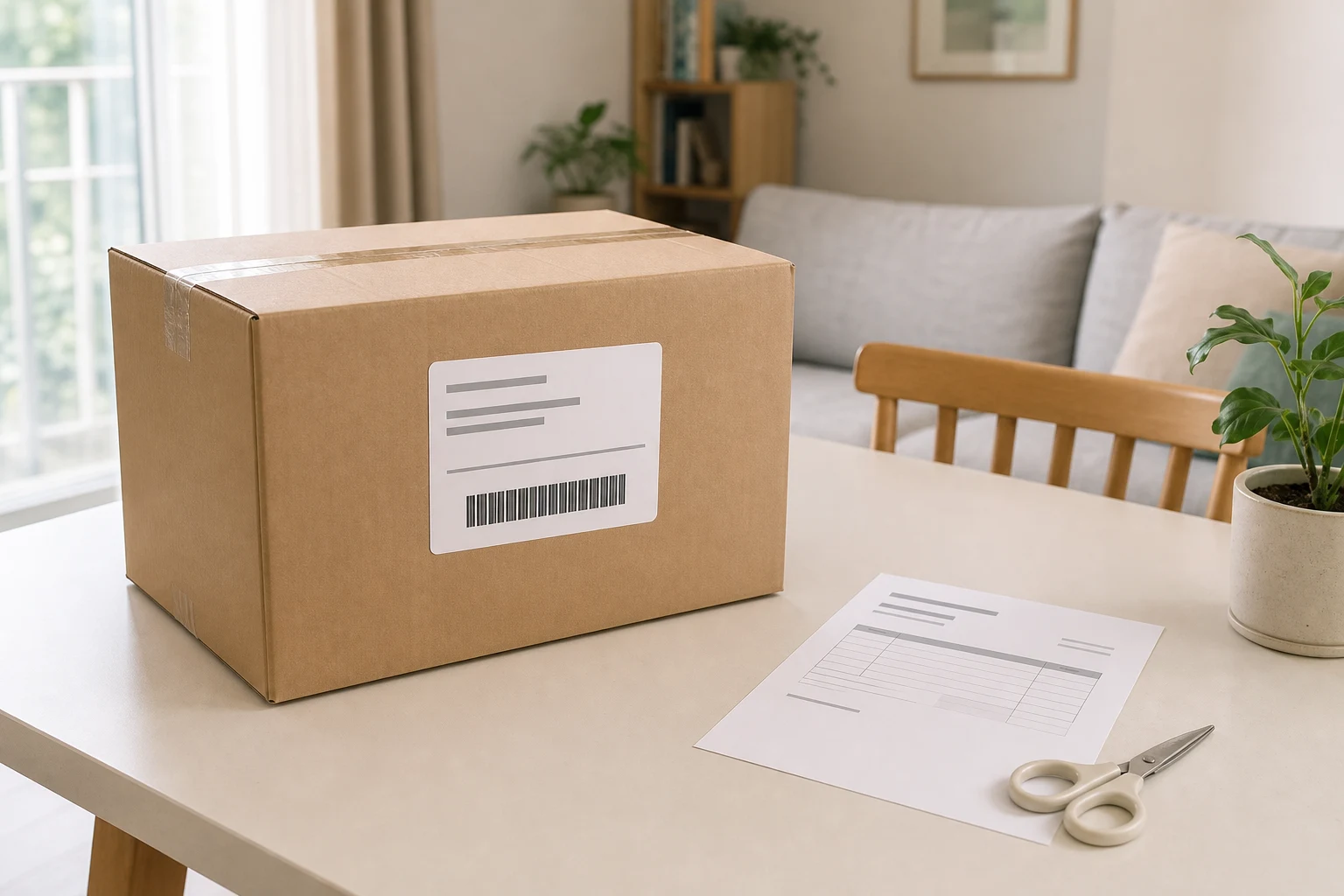
Verify the item and return information first
Before tearing up paperwork, confirm that the product is correct, undamaged, and still within any return window. Save the order record in the retailer account or keep only the document that the return process actually requires.
Once that check is done, remove the complete shipping label. A partially masked phone number or temporary number still does not need to remain on a box headed for a shared recycling area.
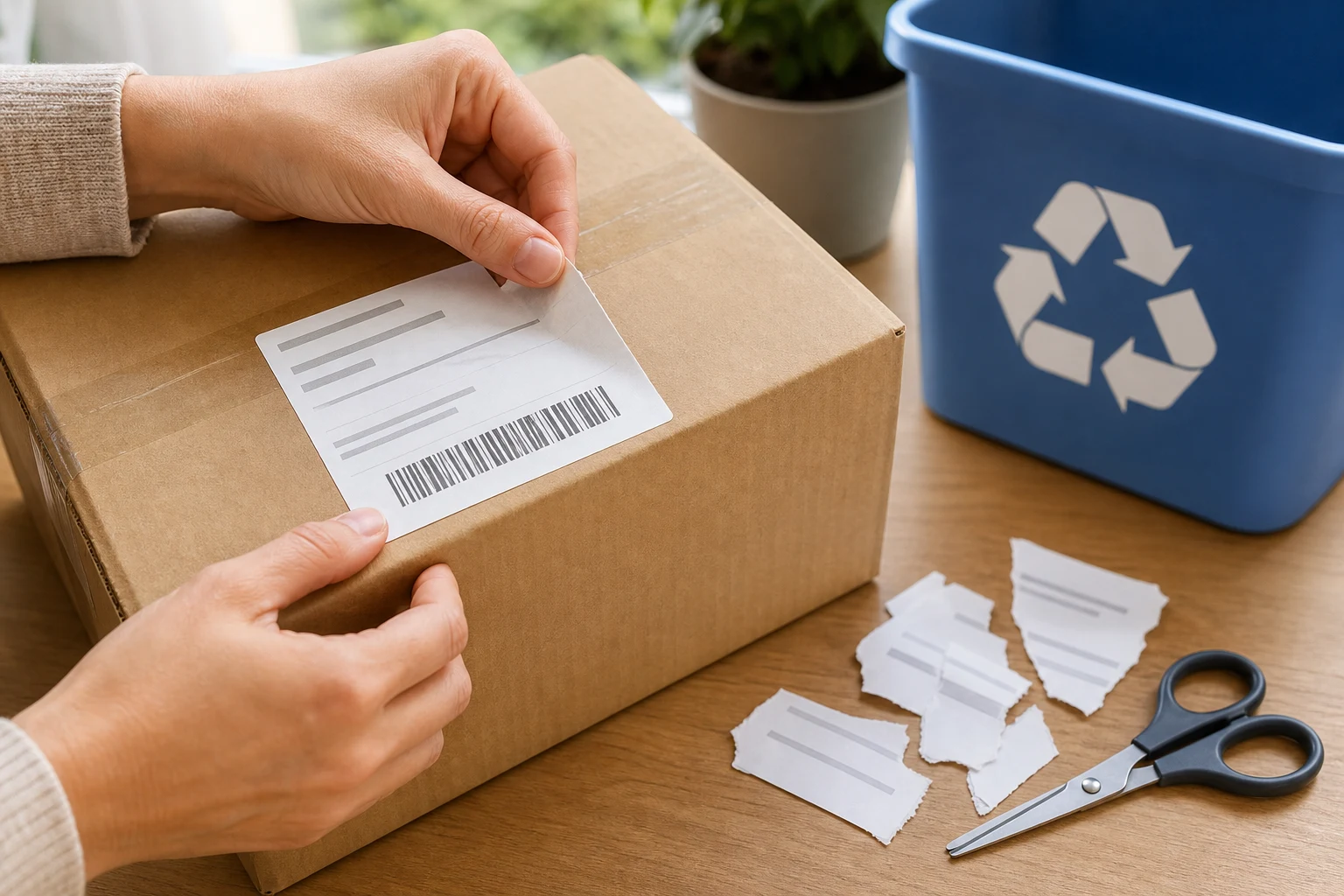
Remove the label and barcode together
Carriers and label formats encode different information, so it is not accurate to say that every barcode exposes a full address or phone number. Korea's privacy regulator nevertheless advises removing both the delivery label and barcode.
Peel the label in one piece when possible. If the adhesive will not release, cut out the small labeled section of cardboard and tear the label so its lines cannot be easily reassembled. There is no need for fire or harsh solvents.
Check the inside for packing slips
Packing slips, return forms, and order summaries can include item names, order numbers, or recipient details. Look under padding, keep what is still needed, and tear the rest before disposal.
The same rule applies when reusing a carton for a move or second-hand sale. Removing every old label and barcode protects privacy and reduces the chance of a new shipment being misrouted.
Prompt pickup reduces unnecessary exposure
Bring a delivered box inside when you reasonably can, or use a secure locker or collection point during a long absence. Korean guidance also recommends limiting order information and using a temporary phone number when the service offers one.
A temporary number narrows exposure but is not a guarantee against every risk. Review the retailer's privacy and delivery settings along with how parcels are left in your building.
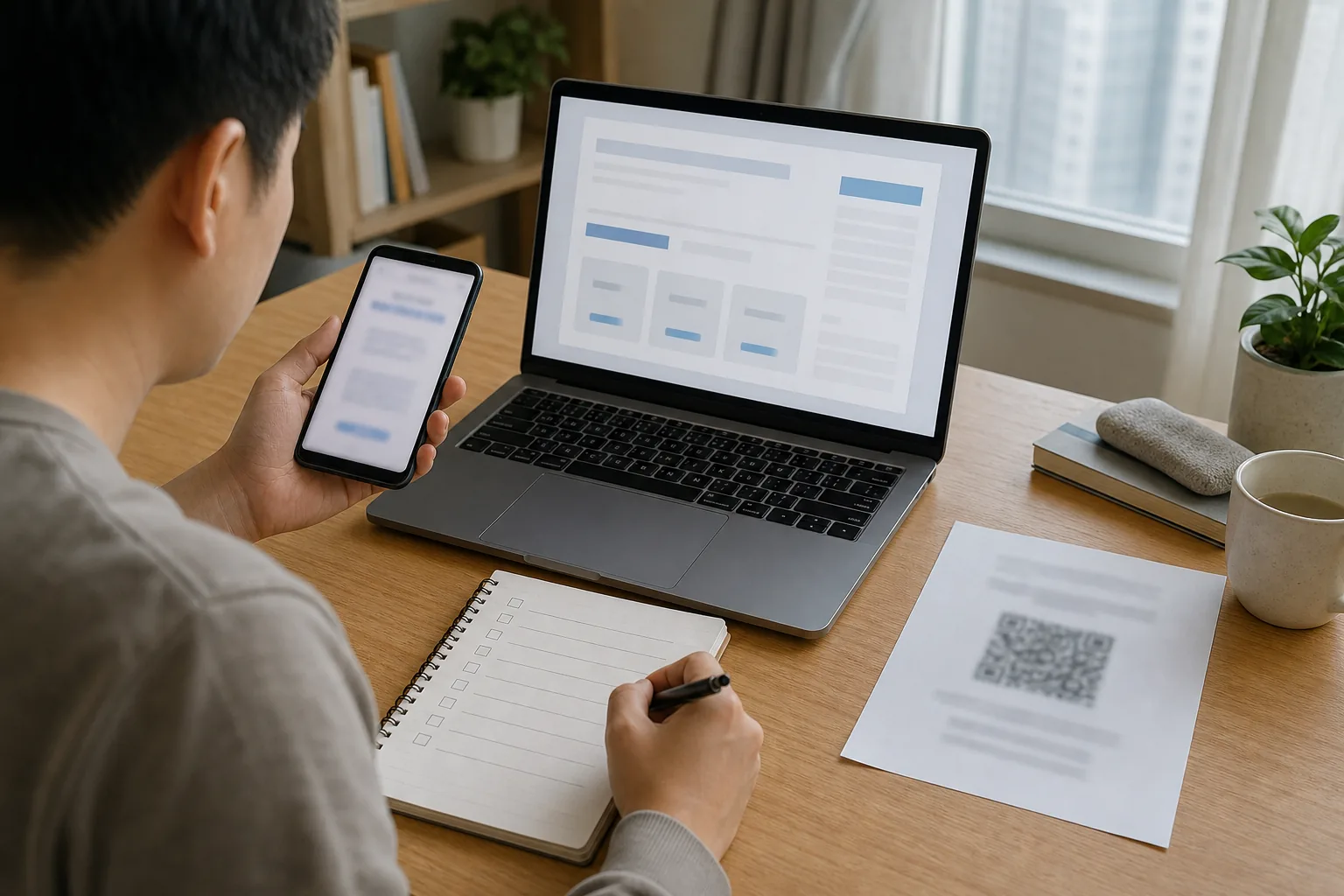
Verify unexpected delivery texts outside the message
If a text claims that an unknown parcel needs an address correction or small payment, do not use its link. Open the retailer account or carrier's official app independently and check the real order history.
Korean readers can paste a suspicious message into KISA's checker; people elsewhere can use their national reporting service. If you already entered account or card details, contact the relevant service and financial institution promptly.
One last check
Five checks before flattening the box
- 01
Confirm the item and return window, then save any receipt you still need.
- 02
Remove the whole outer label and its barcode rather than covering one line.
- 03
Look for packing slips and return paperwork inside the box.
- 04
Clear every old label and barcode before reusing the carton.
- 05
Verify an unexpected delivery text in your retailer account instead of tapping its link.
Sources
Sources used for this article
- Korea PIPC — Parcel delivery privacy guidance
- KISA — Smishing message checking service
- FTC — Warning about delivery-service impersonation texts
- Yonhap — Summary of Korean parcel privacy guidance
Checked July 30, 2026 against Korea's Personal Information Protection Commission and KISA, the U.S. FTC's delivery-text warning, and independent reporting. Barcode contents vary by carrier and format. The images use fictional labels with no real personal information.
Was this guide useful?
This browser can leave one heart per article.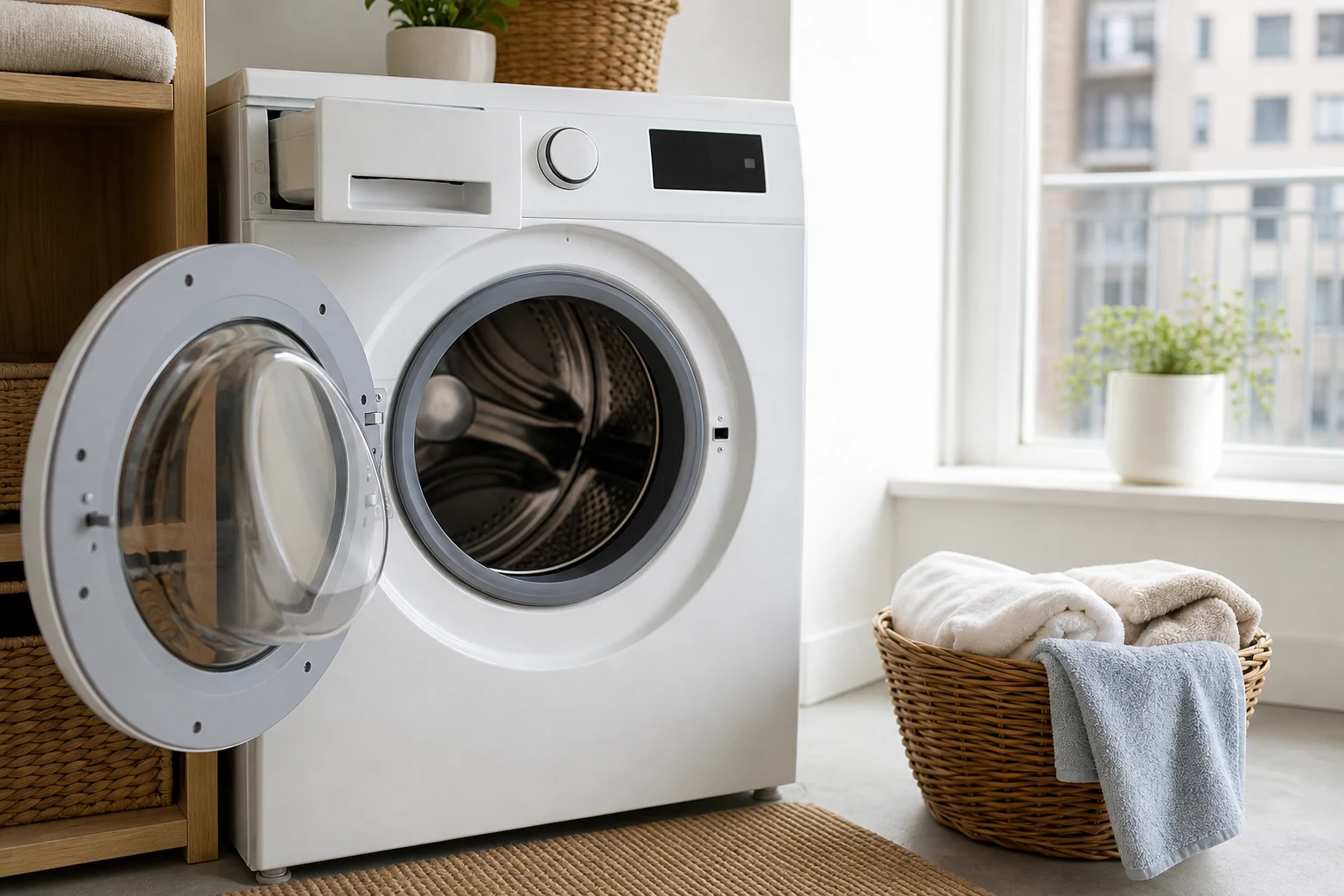
Washer Smells Musty? Check These Four Places First
Before repeating a tub-clean cycle, separate musty, drain, and electrical odors. Then check the door, detergent drawer, gasket, and filter in a safe order.
Trace the odor in a sensible order
Goody King Magnetic Cubes Recall: Check the Model and Claim a Refund
Certain Goody King magnetic building cubes sold on Amazon.com are recalled in the U.S. Check the model number, official photos, and prepaid-return steps.
Check the models and refund steps