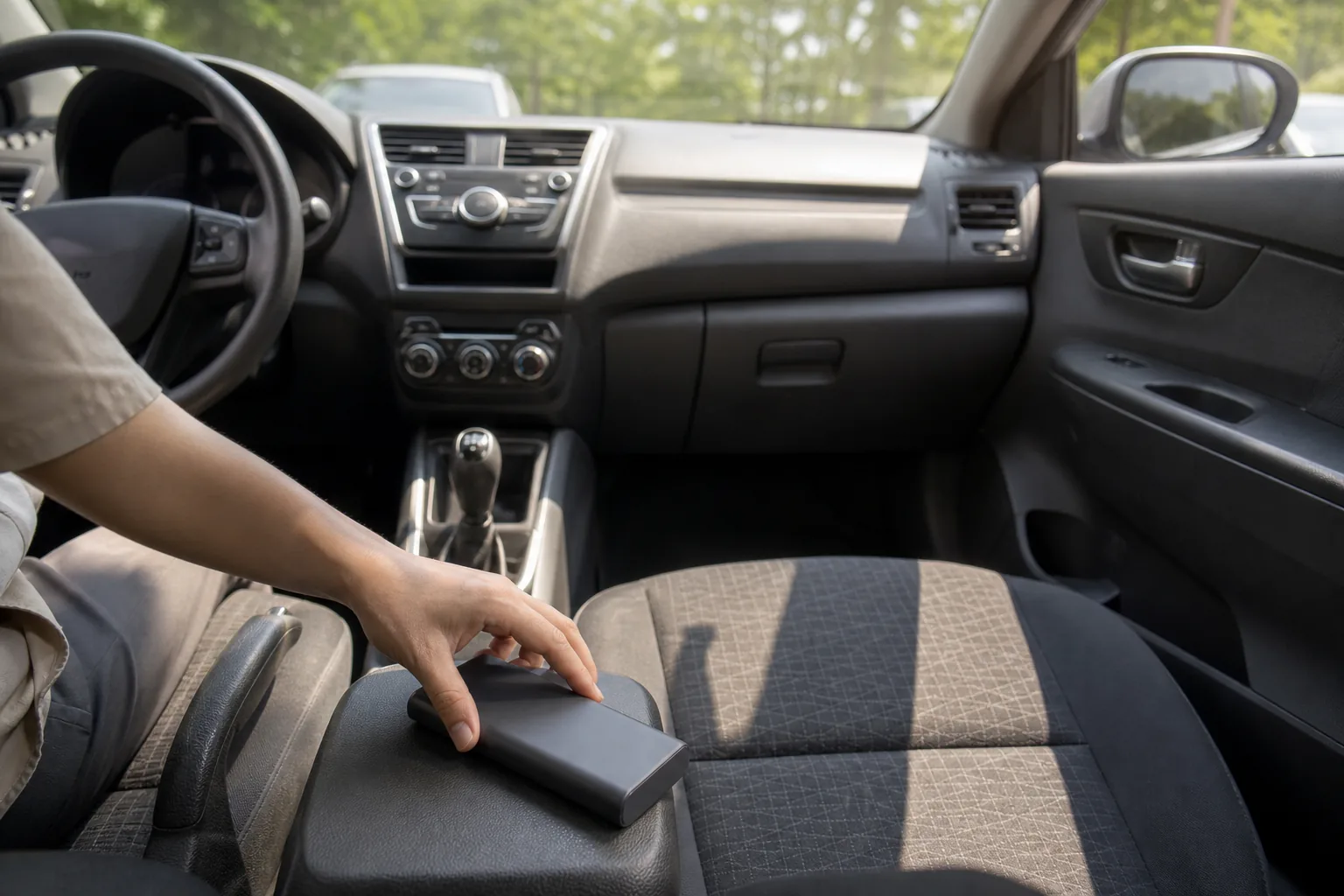
The short answer: take it with you
Australia’s product-safety regulator gives unusually direct advice: do not leave a power bank in a parked vehicle. Health Canada similarly says not to leave lithium-ion batteries in the sun or in a hot or cold car. That is a sensible default even when the forecast does not look extreme.
This is risk advice, not a prediction that every battery will fail. Heat can speed up battery ageing and make an existing defect or damage more consequential. A glovebox, centre console, or boot is still part of the parked vehicle, so moving the battery out of sight is not the same as moving it out of the heat.
A parked car is not normal room-temperature storage
A closed vehicle collects solar heat, and surfaces in direct sun can become hotter than the outside air. The exact temperature depends on weather, shade, glass, interior colour, and how long the car sits. That is why a single ‘safe car temperature’ would be misleading.
The better rule is to treat the manufacturer’s operating, charging, and storage limits as different specifications. A wide storage range in a manual does not automatically approve leaving the product in a sun-heated vehicle, especially when public-safety guidance says to avoid it.
Check the exact model, not a number copied from another brand
Find the model number on the case and open the maker’s manual or support page. Some manufacturers publish a narrow range for use or charging and a different range for storage. Those figures describe that product under stated conditions; they are not a universal threshold for every power bank.
Also check a government recall database when the model is old, second-hand, or unfamiliar. A recall does not prove that heat caused a particular defect, but it can tell you what action the recall requires, regardless of how the unit looks.
Do not charge a battery that is already hot
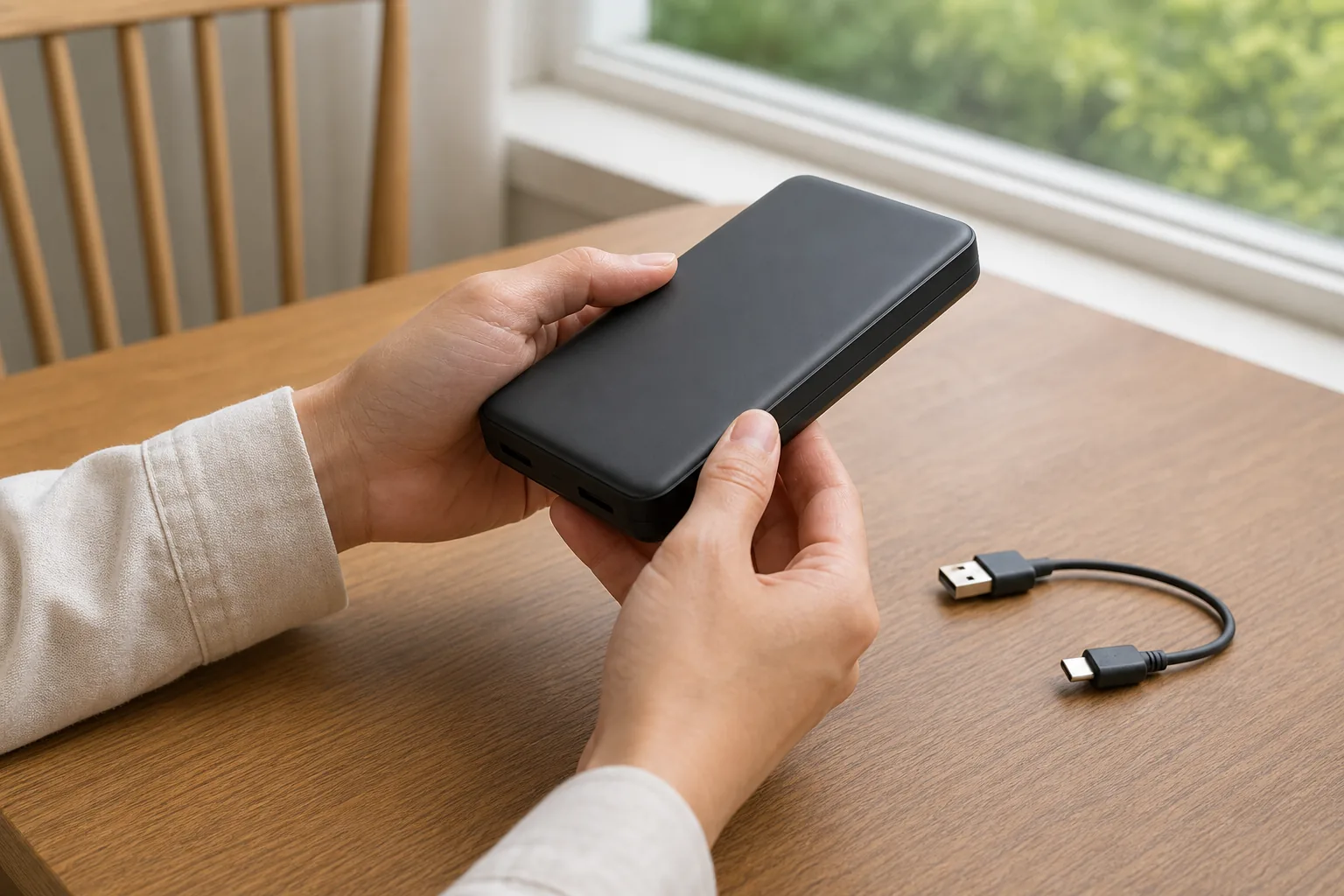
Charging the power bank, fast-charging it, or using it to power another device creates more heat. If it feels unusually hot after being in the car, disconnect it and wait until it has returned to room temperature before deciding whether it is safe to use.
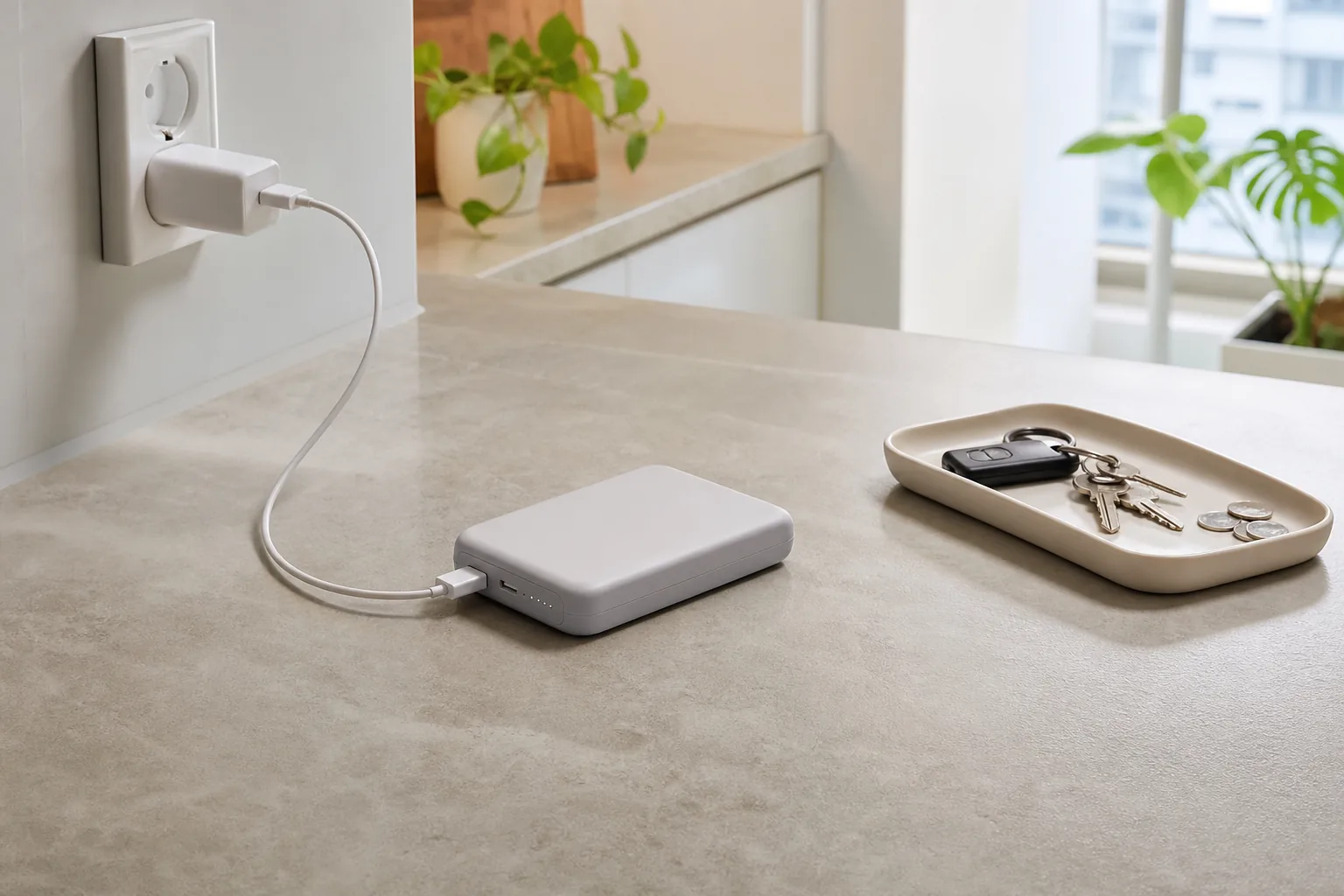
Recharge only with a suitable charger and cable, on a hard non-flammable surface, away from bedding, sofas, paper, and direct sunlight. Keep it visible while charging rather than covering it or leaving it in a bag.
If you already left it in the car, inspect before reconnecting it
Once it is safe to handle, let it return to room temperature in a cool, dry, ventilated spot away from anything flammable. Follow the manufacturer’s instructions and keep moisture away from the battery terminals.
Look for a swollen or distorted case, a seam that has opened, leaking material, discolouration, an unusual chemical smell, hissing, or heat that returns without use. A sharp drop in charging performance can also be a reason to ask the manufacturer for advice. Do not squeeze, puncture, or try to flatten a swollen battery.
Know when to stop—and how to dispose of it
Stop using a power bank that is damaged, swelling, leaking, venting gas, or overheating. If it is smoking or burning, leave the area and call the local emergency service. Do not take personal risks trying to move an actively failing battery.
Lithium-ion batteries do not belong in household rubbish or ordinary recycling. Contact the manufacturer or your local hazardous-waste or battery-recycling service for instructions. Rules differ by country, and recalled batteries may need a different disposal route from ordinary used batteries.
One last check
Before you use it again
- 01
Have you kept it disconnected until the whole unit is back at room temperature?
- 02
Is the case flat, with no swelling, distortion, split seam, leak, unusual smell, or noise?
- 03
Have you checked the exact model manual and any official recall notice?
- 04
Can you recharge it on a hard, non-flammable surface where you can see it?
Sources
Sources used for this article
- ACCC Product Safety — Power banks guide
- Health Canada — Lithium-ion battery safety
- NFPA — Lithium-ion battery safety tips
- Samsung — Galaxy battery care and maintenance
- U.S. CPSC — Product recalls and safety warnings
The official safety guides and recall search were reopened on August 4, 2026. Product temperature limits and recall status can change, so confirm the exact model and its current manufacturer instructions before use.
Was this guide useful?
This browser can leave one heart per article.
Google Pixel Tag Buying and Setup Guide: Compatibility, Find Hub, and Privacy
Check the Google Pixel Tag's announced US price and release date, Android 9 baseline pairing, UWB precision-finding requirements, Find Hub offline-network controls, sharing, and unknown-tracker alerts before you buy.
Check Pixel Tag buying and setup requirements
Windows 11 KB5121003: Check Your Version, Build, and Update Status
KB5121003 is rolling out to Windows 11 24H2 and 25H2. Check the applicable version, target build, built-in install path, restart verification, and Microsoft's current known-issue status.
Check the KB5121003 install path